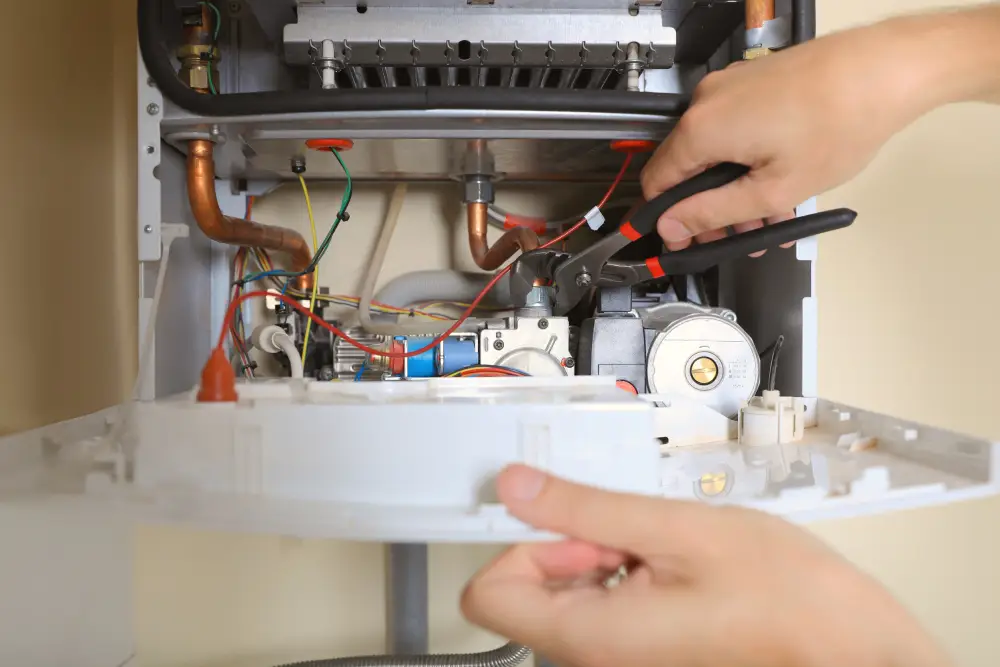
When a boiler fails in the middle of a Scottish winter, it is rarely convenient. With freezing temperatures, short daylight hours and constant demand for heating, even a short loss of warmth or hot water can quickly become stressful.
This guide explains when a boiler issue becomes an emergency, what to expect from a rapid response repair service, and how emergency costs are assessed. If you live in Falkirk, understanding these points can help you act quickly and safely when problems arise.
[CTA 1: Contact our team for urgent advice if your heating has stopped unexpectedly.]
What counts as an emergency boiler repair?
Not every boiler fault requires immediate attention, but some situations should never be ignored. An emergency repair is typically required when a fault affects safety, heating, or hot water during cold weather.
Common emergency scenarios include:
- Complete loss of heating in winter
- No hot water at all
- Boiler shutting down repeatedly
- Unusual noises combined with error codes
- Leaks near the boiler unit
In these cases, waiting can increase discomfort and risk further damage. Prompt assessment helps prevent small faults from becoming larger, more expensive problems.
Why winter breakdowns are more common
Cold weather places additional strain on boiler components. Systems run for longer periods, pipework contracts in low temperatures, and pressure fluctuations become more likely.
Typical winter-related causes include:
- Frozen condensate pipes
- Worn components failing under constant use
- Low system pressure due to leaks
- Faulty sensors reacting to cold conditions
These issues often appear suddenly, which is why access to boiler repair Falkirk services around the clock can be so important during winter months.
How quickly should emergency repairs be carried out?
Response time matters when temperatures drop. While exact times vary depending on availability and fault severity, emergency services aim to attend as quickly as possible.
A prompt visit allows engineers to:
- Restore heating or hot water where possible
- Make the system safe if a full repair cannot be completed immediately
- Identify whether a temporary or permanent fix is required
Quick action helps reduce disruption and protects your home from further issues such as frozen pipes or internal damp.
What affects the emergency boiler Falkirk cost?
Emergency call-outs can vary in price depending on several factors. Understanding these helps set realistic expectations during stressful situations.
Key cost influences include:
- Time and day of the call-out
- Nature and complexity of the fault
- Parts required for the repair
- Accessibility of the boiler location
The emergency boiler Falkirk cost may be higher outside standard working hours, but transparency is essential. Reputable engineers explain charges clearly before proceeding.
Typical emergency repair costs explained
While prices vary, it helps to understand how repair costs are usually structured.
| Repair Factor | How It Impacts Cost |
| Call-out timing | Out-of-hours visits may cost more |
| Fault severity | Minor fixes cost less than major component failures |
| Parts required | Replacement components increase overall cost |
| Labour time | Longer diagnostics raise labour charges |
Understanding boiler repair cost structures allows homeowners to make informed decisions, even under pressure.
Is it safe to keep resetting a faulty boiler?
Repeatedly resetting a boiler can sometimes restore operation temporarily, but it is not a long-term solution. If a boiler continues to shut down, it is usually signalling a fault that needs attention.
Continual resets can:
- Mask underlying issues
- Increase wear on components
- Delay necessary repairs
If a fault persists, arranging professional assistance is the safest approach.
When repair is not the right solution
In some cases, repeated breakdowns or severe faults indicate that repair is no longer cost-effective. Older boilers nearing the end of their lifespan may struggle to cope with winter demand.
Signs replacement may be more suitable include:
- Frequent emergency call-outs
- Rising repair costs
- Reduced efficiency and uneven heating
- Difficulty sourcing replacement parts
An experienced engineer will explain options clearly, allowing you to choose between repair and replacement based on long-term value.
A typical winter emergency scenario in Falkirk
A common situation involves a household waking up to cold radiators and no hot water during a frosty morning. Error codes appear on the boiler display, and resetting provides only brief relief.
An emergency engineer attends, identifies a frozen condensate pipe and safely restores function. Advice is given on preventing recurrence, and the system is checked for further issues. Quick action avoids extended disruption during freezing conditions.
How to reduce the risk of winter boiler emergencies
While not all breakdowns can be prevented, preparation helps reduce risk.
Practical steps include:
- Annual servicing before winter
- Insulating exposed pipework
- Keeping boiler pressure within recommended range
- Monitoring unusual noises or performance changes
Proactive care reduces the likelihood of urgent repairs when demand is highest.
What should you do while waiting for an emergency repair?
If your boiler stops working, a few steps can help minimise discomfort and risk:
- Keep internal doors closed to retain heat
- Use alternative safe heating methods if available
- Avoid tampering with internal components
- Turn off the boiler if leaks are present
Clear guidance from professionals ensures safety while repairs are arranged.
Final thoughts
Winter boiler failures can be unsettling, but understanding what qualifies as an emergency and how repairs are handled helps you respond calmly and effectively. Acting quickly protects your comfort, safety and home.
Boiler Sure supports Falkirk homeowners with clear advice, experienced engineers and reliable emergency response when it matters most. Knowing who to call can make all the difference during Scotland’s coldest months.