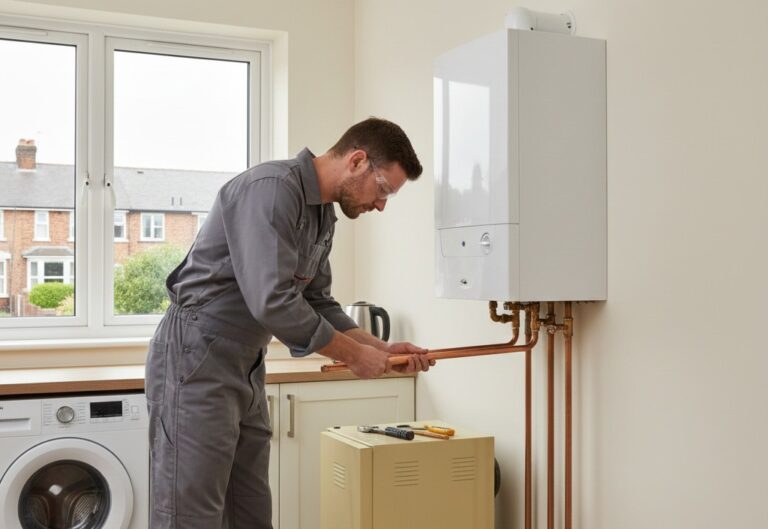
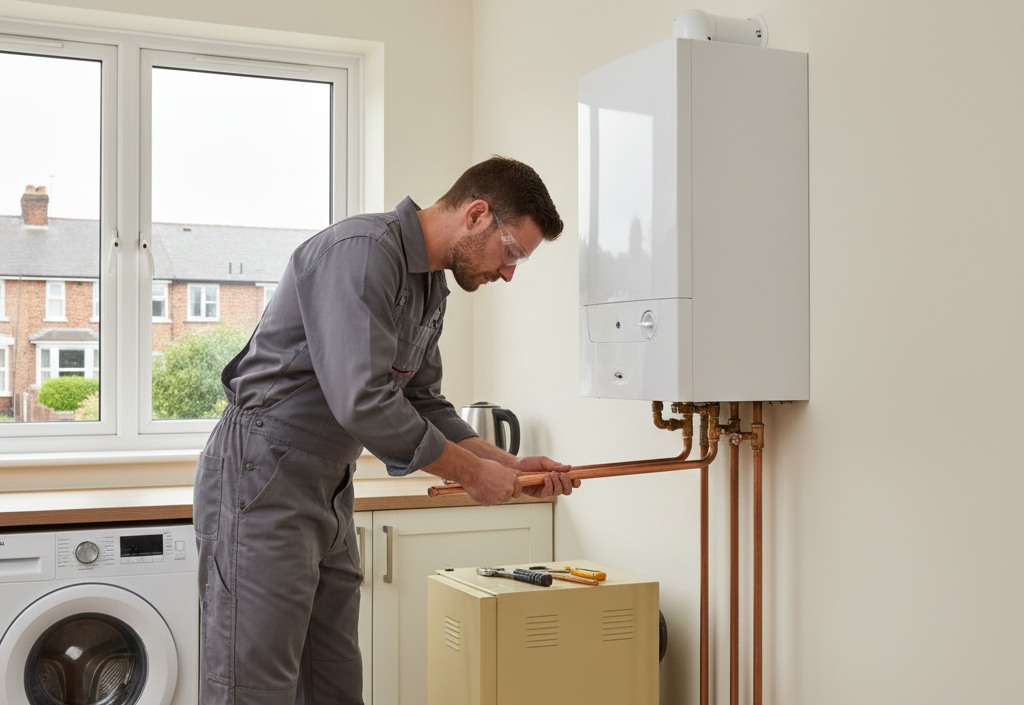
A combi boiler can become less reliable gradually. A strange noise one month may be followed by a pressure problem, repeated fault codes or inconsistent hot water later on. The challenge for homeowners is knowing whether these issues justify a repair or whether the boiler is approaching the point where replacement makes more sense.
There is no single fault that automatically means a new boiler is required. The age and condition of the appliance, frequency of breakdowns, availability of parts and likely repair costs all need to be considered together.
If you are considering a combi boiler replacement stirling, a good engineer should explain what is actually going wrong and why replacement is being recommended rather than simply presenting a new boiler as the only option.
If your boiler has become unreliable, contact Boiler Sure for practical advice on whether repair or replacement is likely to be the more sensible route.
What signs should an engineer investigate?
Several symptoms can indicate that a combi boiler needs attention.
Common warning signs include:
- Repeated breakdowns
- Frequent pressure loss
- Unusual banging or vibrating noises
- Inconsistent hot water
- Radiators failing to heat properly
- Repeated fault codes
- Water leaks around the appliance
- Increasing repair requirements
- Boiler switching off unexpectedly
None of these symptoms automatically means the boiler needs replacing.
A professional assessment should identify the likely cause and determine whether the problem can reasonably be repaired.
Does the age of the boiler matter?
Age is an important consideration, but it should not be used on its own to justify replacement.
An older boiler that has been reliable and can be repaired economically may still be worth keeping. Conversely, a relatively modern appliance with repeated major faults may create a stronger case for replacement.
An engineer should consider:
- Age of the appliance
- Previous repair history
- Current fault
- Availability of replacement parts
- Expected repair cost
- Condition of other components
- Reliability of the system
- Likely future repair requirements
This provides a more useful picture than simply saying an appliance is “old”.
When does repeated repairing become a concern?
Repeated repairs can become frustrating and expensive, particularly when one fault is followed by another.
If a boiler has required several significant repairs within a relatively short period, an engineer should help you compare the likely future repair costs with the benefits of installing a new system.
This does not mean every repair is a reason to replace the boiler. The key is understanding the overall pattern.
For homeowners considering a boiler replacement cost, the decision should include both the immediate repair expense and the potential future costs of keeping an ageing appliance.
What does inconsistent hot water indicate?
Inconsistent hot water can have several possible causes.
The problem could relate to the boiler itself, the water supply, flow rate, internal components or another part of the system.
A professional should investigate before recommending replacement.
Useful questions include:
- Does the problem affect all taps?
- Does it happen only at certain times?
- Is the water temperature fluctuating?
- Is the heating working normally?
- Has the issue developed gradually or suddenly?
These details can help the engineer identify whether the boiler is genuinely responsible.
Could low pressure mean the boiler needs replacing?
Not necessarily.
A combi boiler may lose pressure for a number of reasons, including a leak, an issue with an internal component or another system fault.
Simply topping up the pressure repeatedly without finding the underlying cause is not a long-term solution.
An engineer should investigate why the pressure is dropping and explain whether the cause can be repaired.
If the boiler itself is reaching the end of its useful service life and the fault is likely to be expensive to resolve, replacement may become a more sensible option.
What should an engineer check before recommending replacement?
A proper assessment should look at the boiler and the wider heating system.
The engineer may consider:
| Area | Why it matters |
| Boiler age | Indicates likely remaining service life |
| Fault history | Shows reliability over time |
| Current fault | Helps establish repair options |
| Parts availability | May affect repair feasibility |
| Repair cost | Helps compare repair and replacement |
| Heating performance | Shows how well the system operates |
| Hot water performance | Indicates whether demand is being met |
| System condition | Helps identify wider issues |
This approach gives homeowners a clearer basis for the decision.
How should an engineer explain repair versus replacement?
The explanation should be practical and balanced.
If the fault is straightforward and the boiler is otherwise in good condition, repair may be the sensible option.
If the appliance has multiple faults, expensive components are failing or repair costs are becoming disproportionate to the boiler’s age and condition, replacement may provide greater long-term confidence.
A good engineer should explain both possibilities where appropriate.
If you are unsure whether a repair is still worthwhile, speak to the Boiler Sure team for clear guidance based on the condition of your existing appliance.
How does the installation condition affect replacement?
Replacing a boiler is not always a simple matter of removing one appliance and connecting another.
The installer needs to assess the existing pipework, flue arrangement, controls, boiler location and system condition.
If the new boiler is going into a different location or the heating system is being changed, additional work may be necessary.
Understanding these requirements before agreeing to replacement can help prevent unexpected costs.
What should you consider when comparing replacement options?
Once replacement is considered appropriate, the next step is choosing a suitable system rather than simply buying the cheapest available appliance.
Think about:
- Heating demand
- Hot water usage
- Property size
- Available installation space
- Water pressure
- Existing pipework
- Controls
- Warranty
- Future servicing
A replacement should address the reasons the previous boiler became unsuitable rather than simply provide another appliance with the same limitations.
A typical Stirling example
Consider a homeowner whose combi boiler has been installed for many years and has developed several faults over the previous year.
The latest issue is a component failure that can be repaired, but the repair is relatively expensive. Rather than immediately recommending replacement, the engineer reviews the boiler’s age, previous repair history and general condition.
The homeowner is then given two options: repair the current appliance or replace it. The engineer explains the likely advantages and disadvantages of both.
This gives the homeowner the information needed to make a decision based on reliability, cost and long-term plans.
What are signs that an engineer may be recommending replacement too quickly?
Homeowners should feel comfortable asking for an explanation.
Questions are particularly important if:
- The engineer does not investigate the fault
- No repair option is discussed
- The age and condition of the boiler are ignored
- The recommendation is based solely on the boiler being old
- No explanation is given for the proposed replacement
- The quotation contains unclear additional costs
Replacement can be the right answer, but the reasoning should be understandable.
How should you think about boiler replacement cost?
The purchase price is only one consideration.
A new system may involve installation labour, controls, pipework alterations, removal of the old appliance and commissioning.
There is also the potential benefit of improved reliability and reduced disruption from repeated breakdowns.
A sensible comparison therefore looks at the total cost and expected value rather than focusing only on the initial figure.
When is replacement likely to make more sense?
Replacement may be worth considering when several factors point in the same direction.
For example:
Older appliance + repeated faults + increasing repair costs + declining reliability
This combination can make continued repair less attractive.
However, the decision should still be based on a professional assessment rather than a fixed rule about boiler age.
Frequently Asked Questions
Final thoughts
A combi boiler replacement stirling should be considered when the evidence suggests that continued repair is no longer the most sensible option.
Repeated breakdowns, expensive repairs, inconsistent performance and an ageing appliance can all be relevant, but none should be considered in isolation. A good engineer should investigate the problem, explain the repair options and then discuss replacement if appropriate.
Boiler Sure focuses on clear, practical advice so homeowners can understand why a particular recommendation has been made. If your boiler is becoming unreliable, contact our team to discuss the problem and find out what your options are.