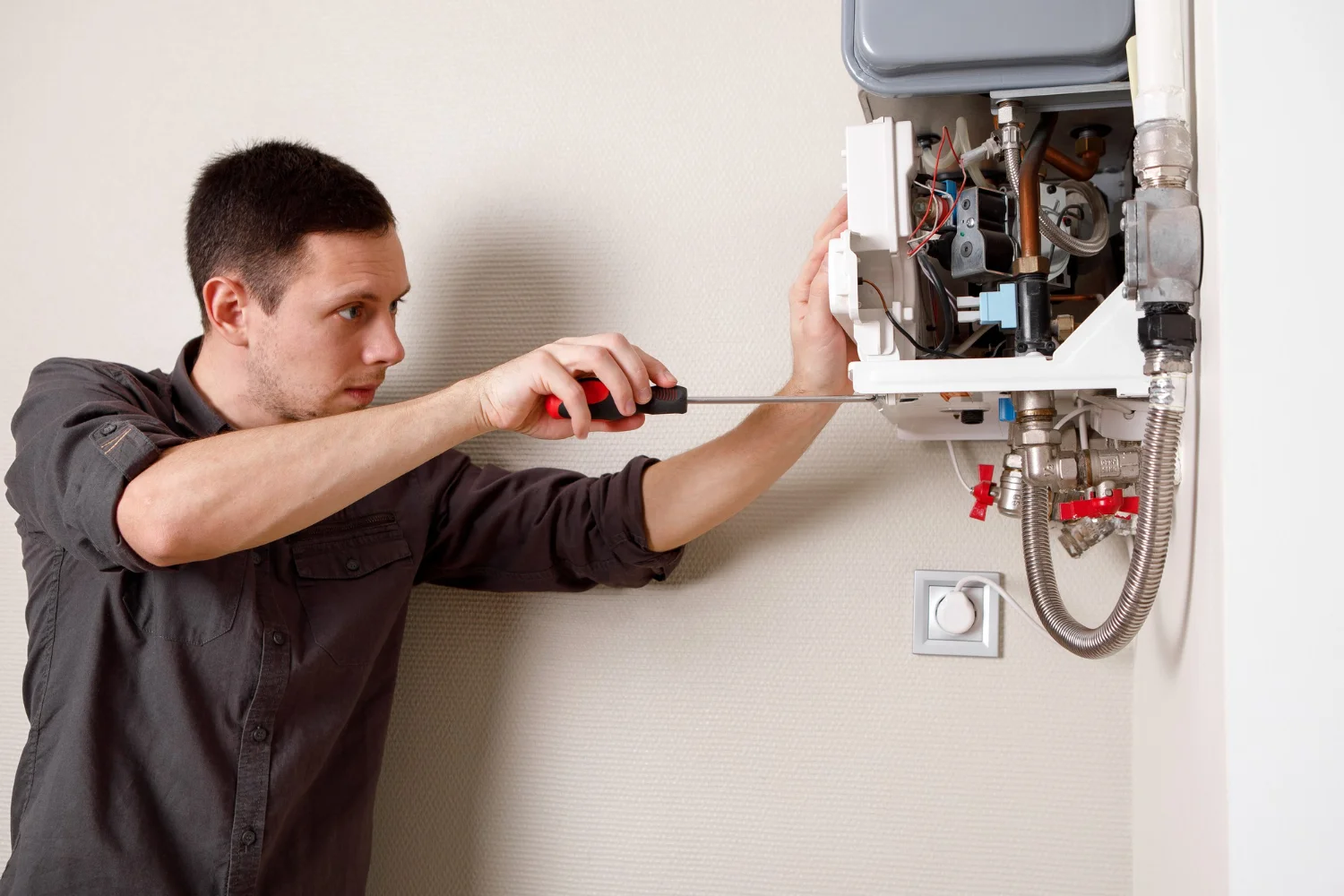
When a boiler breaks down, the immediate concern is usually getting the heating or hot water working again. But if a household has experienced repeated callouts, it is worth looking beyond the individual breakdown.
Sometimes the boiler itself is at fault. In other cases, recurring problems can involve controls, circulation, system pressure, configuration or other parts of the heating system.
That distinction matters when considering boiler cover. A policy may provide useful protection against certain unexpected repairs, but it does not necessarily solve an underlying setup problem. Understanding what is covered, what is excluded and how the wider heating system is maintained can help homeowners make a more informed decision.
What does boiler cover usually protect?
Boiler cover policies vary considerably, so there is no single definition of what every policy includes.
Depending on the provider and level of cover, a policy may include some combination of:
- Engineer callouts
- Boiler breakdowns
- Certain replacement parts
- Labour
- Emergency repairs
- Heating controls
- Central heating components
- Annual servicing
- Other heating-related equipment
However, exclusions and conditions can be just as important as the benefits.
For example, some policies may exclude:
- Pre-existing faults
- Cosmetic damage
- Certain older appliances
- Parts that are no longer available
- Problems caused by poor maintenance
- Certain controls or external components
- Damage caused by modifications
- Costs above a specified claim limit
Before choosing boiler cover edinburgh, read the policy wording carefully rather than relying solely on the headline description.
Can boiler cover help with repeated breakdowns?
Potentially, but it depends on the cause of the problem and the terms of the policy.
If a covered boiler component fails unexpectedly, the policy may provide assistance with the repair.
But suppose a boiler repeatedly cycles because of incorrect settings, poor balancing or an issue elsewhere in the heating system. In that case, replacing a failed component may not resolve the underlying cause.
This is why recurring breakdowns deserve proper investigation.
A useful question is:
Is the boiler repeatedly failing, or is something else causing the system to behave abnormally?
The answer can affect what work is actually needed.
What is the difference between a boiler fault and a setup problem?
A boiler fault normally involves a component or function that is not operating as it should.
A setup problem is different. The equipment may be functioning, but the system has not been configured, balanced or controlled appropriately.
For example, a homeowner might notice:
- Frequent boiler cycling
- Radiators heating unevenly
- Very high flow temperatures
- Poor temperature control
- Rooms taking too long to warm up
- The boiler switching on more often than expected
These symptoms can have several possible causes.
The boiler may be faulty, but the cause could also involve controls, valves, circulation, system balancing or configuration.
This is why repeatedly paying for individual repairs without understanding the pattern can become frustrating.
Could faulty controls lead to unnecessary callouts?
They can contribute to heating problems that appear to be boiler-related.
Controls determine when the boiler receives a demand for heat and, depending on the system, can influence how the boiler responds.
Possible control-related problems include:
- Incorrect thermostat settings
- Faulty thermostats
- Wiring issues
- Poor thermostat positioning
- Incorrect schedules
- Compatibility problems
- Faulty sensors
- Communication problems with smart controls
For example, if a thermostat is not accurately detecting room temperature, the heating system may continue operating when the homeowner expects it to stop.
That does not necessarily mean the boiler itself has failed.
An engineer can assess the controls and wider system alongside the appliance.
If you have experienced several heating callouts for similar symptoms, it may be useful to ask whether the underlying cause has been identified rather than simply treating each individual fault.
What happens when a boiler repeatedly loses pressure?
Repeated pressure loss should not simply be ignored.
A sealed central heating system can lose pressure for various reasons. Possible causes include:
- A water leak
- Pressure relief valve discharge
- Expansion vessel problems
- Radiator or valve leaks
- Air or other system issues
- Component faults
The appropriate response depends on the cause.
Occasionally topping up pressure may temporarily restore operation, but if the pressure keeps falling, the reason should be investigated.
A boiler cover policy may or may not cover every cause of pressure loss, depending on its terms.
Can boiler cover include central heating controls?
Some policies extend beyond the boiler and may include certain controls or central heating components. Others focus mainly on the boiler itself.
This is an important distinction when comparing policies.
If recurring issues have involved thermostats, programmers, pumps, valves or other system components, check whether these are actually included.
A policy described as boiler cover does not necessarily mean that every part of the heating system is protected.
Look for clear wording about:
| Item | What to check |
|---|---|
| Boiler | Is your model and age eligible? |
| Controls | Are thermostats and programmers included? |
| Pumps | Is the central heating pump covered? |
| Valves | Which valves are included or excluded? |
| Radiators | Are radiator-related problems covered? |
| Labour | Is engineer labour included? |
| Callouts | Are there limits on callout numbers? |
| Excess | How much do you pay per claim? |
| Claim limits | Is there a maximum repair value? |
| Waiting period | Can you claim immediately after taking cover? |
The exact terms should always be checked with the policy provider.
How much does boiler cover cost?
The gas boiler cover cost depends on the provider, level of cover and what equipment is included.
A basic boiler-only policy can have a different price from comprehensive heating cover that includes controls and other central heating components.
Other factors may include:
- Boiler age
- Boiler type
- Existing condition
- Level of cover
- Excess
- Claim limits
- Servicing requirements
- Whether emergency assistance is included
A lower premium does not necessarily provide the same protection as a more comprehensive policy.
When comparing prices, look at the total package rather than just the monthly figure.
Is emergency boiler cover different from standard cover?
Some providers offer emergency assistance as part of their policies, while others may provide it as a separate option.
The definition of an "emergency" can also vary.
A policy might specify particular circumstances under which an urgent callout is covered. There may also be limits concerning opening hours, response arrangements, claim frequency or the types of faults covered.
This is worth checking if your main reason for considering cover is concern about losing heating or hot water unexpectedly.
If you are researching emergency boiler edinburgh cost, remember that an emergency repair paid for directly and an emergency service included within a cover policy are not necessarily comparable products.
One is a specific repair or callout, while the other may involve ongoing protection subject to policy terms.
What if the same fault keeps returning?
A recurring fault deserves closer attention.
If a boiler repeatedly develops the same problem, the engineer should consider whether there is an underlying cause rather than treating each episode as an isolated incident.
For example:
First visit: A component is replaced.
Second visit: The same symptom returns.
Third visit: Another component is replaced.
At that stage, it becomes reasonable to ask whether something else is causing the repeated failure.
Potential areas to investigate could include:
- System pressure
- Electrical supply
- Controls
- Circulation
- Water quality
- System contamination
- Incorrect configuration
- Component compatibility
- Wider system faults
A repair policy can help with eligible repairs, but diagnosis remains important.
Does boiler cover replace regular servicing?
Not necessarily.
Some policies include servicing, while others do not.
Even where a policy includes a service, homeowners should check exactly what is provided and how frequently it must be carried out.
Regular servicing and maintenance can help identify certain problems and may also be a condition of some warranty or cover arrangements.
It is important not to assume that taking out cover removes the need to look after the heating system.
What should you check before buying boiler cover?
Before agreeing to a policy, read the important details.
Check the boiler eligibility
Some policies have restrictions based on boiler age, type or condition.
Check the exclusions
Find out what is specifically excluded rather than focusing only on what is advertised as included.
Check the excess
A policy may require you to pay an excess each time you make a claim.
Check claim limits
Some policies place limits on repair costs or the number of claims.
Check waiting periods
A policy may not provide immediate protection for every type of problem.
Check the components covered
If your concern involves controls, pumps or other heating components, confirm that they are included.
Check servicing requirements
Find out whether you need to maintain the boiler in a particular way to remain eligible for cover.
If you are comparing cover options, make a simple list of the boiler and heating components you want protected, then check each policy against that list.
Could boiler cover be useful for an older boiler?
It can be, but eligibility and exclusions become particularly important.
Older appliances may have more frequent repair requirements, but they can also be subject to restrictions under some cover policies.
Parts availability can also become relevant.
If an appliance is approaching the end of its practical service life, repeated repairs may eventually lead homeowners to consider replacement instead.
Cover can help with eligible repair costs, but it does not necessarily make an old boiler economical to maintain indefinitely.
When might replacement make more sense than repeated repairs?
There is no single repair count at which replacement becomes the correct answer.
Instead, homeowners can consider the broader picture:
- How old is the boiler?
- How reliable has it been?
- How often has it required repairs?
- Are replacement parts readily available?
- How much have repairs cost?
- Is the boiler meeting the household’s heating and hot water needs?
- Are there wider system problems?
- What would a replacement installation involve?
A relatively minor repair on a reliable boiler can be perfectly reasonable.
Repeated expensive repairs on an ageing appliance may lead to a different discussion.
The important thing is to base the decision on the condition and circumstances of the system rather than simply reacting to the latest breakdown.
Can a boiler cover policy solve poor system setup?
Generally, cover is designed to provide protection according to its terms rather than redesign or optimise a heating system.
If the underlying problem is poor balancing, incorrect controls, unsuitable settings or another setup issue, that may require separate investigation.
This is especially relevant when a boiler appears to be working but the heating system still performs poorly.
For example, repeatedly turning the boiler temperature higher may not resolve uneven radiator performance. Similarly, replacing a boiler component may not fix a control problem.
Diagnosis remains important even when cover is in place.
What should you do if your boiler stops working?
Start with basic, safe checks that are appropriate for a homeowner.
You can check:
- Whether there is power to the boiler
- Whether the programmer or thermostat is calling for heat
- Whether the boiler displays a fault code
- Whether system pressure appears normal
- Whether there has been a recent power interruption
Do not remove the boiler casing or attempt to work on gas components yourself.
If the issue cannot be resolved through normal homeowner checks, contact a suitably qualified heating professional or your cover provider, depending on your circumstances.
If you smell gas or suspect carbon monoxide, follow the appropriate emergency gas safety guidance immediately.
What questions should you ask a boiler cover provider?
Before purchasing cover, ask:
- Is my boiler eligible?
- What parts are covered?
- Are controls included?
- Is labour included?
- Is there an excess?
- Are there claim limits?
- Is there a waiting period?
- Are pre-existing problems excluded?
- Is annual servicing included?
- What happens if a part is no longer available?
Getting clear answers to these questions can make the policy much easier to understand.
How should homeowners think about boiler cover?
The most useful way to view cover is as one part of managing the heating system, not as a replacement for maintenance or proper diagnosis.
Good system maintenance, sensible controls and appropriate installation can all contribute to reliable operation.
Cover can then provide a level of financial protection against certain unexpected problems, provided those problems fall within the policy terms.
If you are comparing boiler cover edinburgh, consider both the protection offered and the condition of the heating system you are trying to protect.
Final Thoughts
Repeated boiler callouts can become frustrating, particularly when the same symptoms keep returning. Before assuming that every problem is an appliance fault, it is worth considering the controls, system pressure, circulation, balancing and overall setup.
Boiler cover can provide useful protection, but the details matter. Check eligibility, exclusions, excesses, claim limits and exactly which parts of the heating system are covered.
Most importantly, recurring problems should be properly diagnosed. A policy may help with an eligible repair, but identifying the underlying cause can be just as important for achieving reliable heating in the long term.
Boiler Sure can help homeowners understand boiler and heating system issues, whether you need advice following a recurring fault, professional repair or support with maintaining your heating system.
If your boiler keeps developing faults or your heating system requires repeated callouts, contact Boiler Sure to discuss the symptoms and identify the appropriate next step.