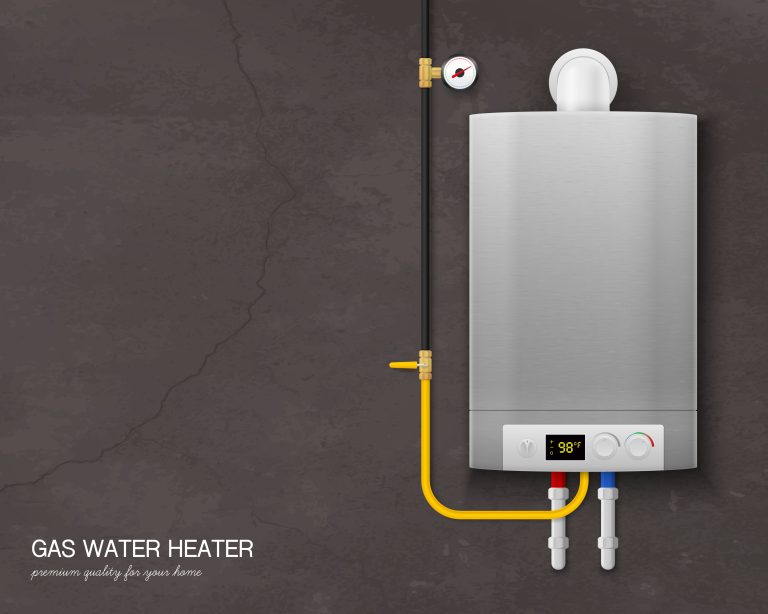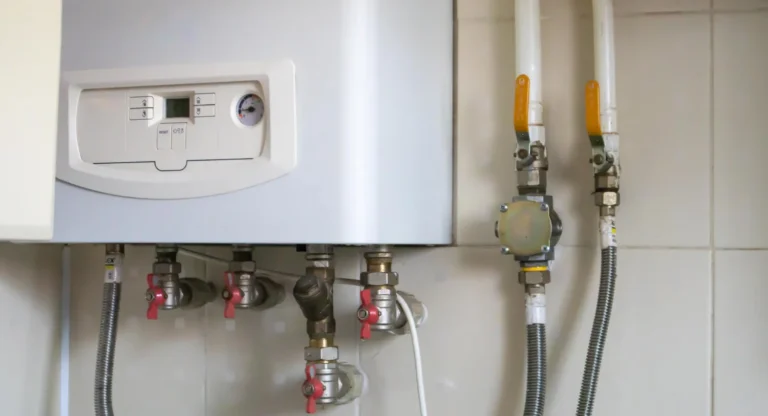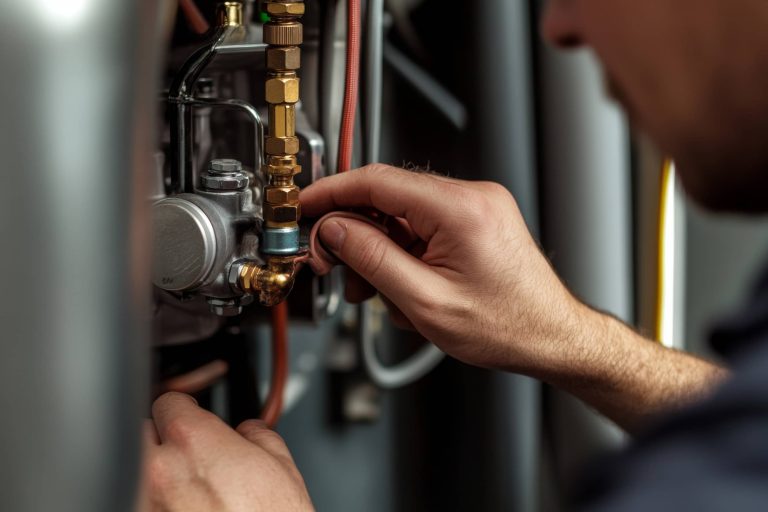
A boiler running at a high temperature is not necessarily broken. Heating systems are designed to operate at different temperatures depending on the property, the weather and the type of system installed.
However, if a boiler consistently needs very high flow temperatures to keep the home warm, or if radiators become extremely hot while rooms remain uncomfortable, it can be worth investigating the wider setup.
The issue may not be a failed component at all. Boiler controls, radiator sizing, system balancing, circulation and operating settings can all affect how effectively heat is delivered around the home.
Understanding the difference can help homeowners know when a simple adjustment may be appropriate and when professional boiler repair is more sensible.
If your heating system is behaving differently from normal, Boiler Sure can help identify whether the issue relates to the boiler itself or the wider heating system. Contact our team for practical advice and an appropriate assessment.
Why does a boiler use a high flow temperature?
Flow temperature refers to the temperature of the water leaving the boiler and entering the heating circuit.
A higher flow temperature can be necessary when a property has significant heat loss or when radiators need hotter water to deliver enough heat. Older heating systems may also have originally been designed around higher operating temperatures.
However, modern condensing boilers can operate efficiently across a range of temperatures. Lower return temperatures can give them greater opportunity to recover additional heat through condensation.
This means a high flow temperature is not automatically a fault, but it is worth understanding why the system is operating that way.
Could high flow temperature be caused by a setup issue?
Yes. Several system-related factors can make a boiler appear to require a higher operating temperature than expected.
Potential causes include:
- Incorrect boiler settings
- Poorly configured heating controls
- Radiators that are not providing enough heat at lower temperatures
- Poor system balancing
- Restricted circulation
- Air within radiators
- Sludge or deposits affecting circulation
- A thermostat positioned poorly
- A control problem
- Incorrect assumptions about the property’s heating requirement
Some of these issues are relatively straightforward to diagnose, while others require a qualified heating professional.
It is therefore unwise to assume that replacing the boiler will solve every heating performance problem.
What signs suggest that the heating system needs checking?
Homeowners may notice several symptoms when a heating system is not operating as intended.
For example:
- The boiler frequently starts and stops
- Radiators heat unevenly
- Some rooms remain cold despite high thermostat settings
- The boiler runs for long periods without achieving comfortable temperatures
- Flow temperatures appear unusually high
- Heating takes much longer than it used to
- The system pressure repeatedly changes
- There are unusual noises from radiators or pipework
- Hot water performance has changed
- Energy use appears higher without an obvious change in heating habits
None of these symptoms proves that the boiler itself has failed.
They are signs that the heating system may benefit from investigation.
Can radiator problems make a boiler work harder?
They can affect how effectively heat is distributed.
Radiators need to transfer heat from the circulating water into the room. If one radiator is partly blocked, contains trapped air or is poorly balanced, heat may not be distributed evenly around the property.
A poorly balanced system can result in some radiators becoming very hot while others receive less flow.
This may encourage homeowners to increase the thermostat or boiler temperature in an attempt to compensate.
However, increasing the temperature does not necessarily resolve the underlying distribution problem.
A heating professional can assess radiator performance and determine whether balancing, cleaning, bleeding or another form of intervention is appropriate.
What is the difference between a boiler fault and a system setup problem?
The distinction can be difficult to make without testing.
A genuine boiler fault might involve a component such as:
- Ignition system
- Fan
- Pump
- Sensor
- Valve
- Heat exchanger
- Electrical control
- Safety device
By contrast, a setup issue could involve the way the heating system has been configured or maintained.
| Symptom | Possible area to investigate | Is professional assessment advisable? |
| Boiler repeatedly cycles | Output, controls or heat demand | Yes |
| One radiator stays cold | Air, valve or circulation | Yes if basic checks do not help |
| All radiators struggle | Boiler, circulation or system condition | Yes |
| Boiler pressure repeatedly falls | Leak or system fault | Yes |
| Rooms remain cold despite hot radiators | Heat distribution or controls | Yes |
| Boiler shows a fault code | Appliance fault or safety condition | Yes |
These are possible areas rather than definitive diagnoses. Several different faults can produce similar symptoms.
Could a thermostat cause a heating system to run too hot?
It can influence how the system behaves.
A room thermostat measures the temperature where it is installed and signals when the heating should operate. If it is positioned in an unsuitable location, its reading may not accurately represent the temperature of the rest of the home.
For example, a thermostat affected by direct sunlight, a nearby heat source or an unusually cold draught may give a misleading indication.
The result can be heating that runs for longer than necessary or switches off before other rooms are comfortable.
Controls should therefore be considered whenever a homeowner reports unusual heating behaviour.
Does high flow temperature always mean inefficient operation?
No.
A higher flow temperature can sometimes be appropriate for the system and the conditions. During colder weather, a property may need more heat to maintain comfortable indoor temperatures.
The concern arises when a system appears unable to maintain comfort without continually relying on unnecessarily high temperatures, particularly when other parts of the system may not be functioning correctly.
Condensing performance also depends on return temperature, so looking only at the boiler’s flow temperature does not provide a complete picture of efficiency.
The heating system should be assessed as a whole.
When should you call an engineer?
Professional help is appropriate when a heating problem cannot be explained by a simple control setting or when the boiler is displaying a fault.
You should seek qualified assistance if:
- The boiler repeatedly locks out
- There is a persistent fault code
- Heating performance has significantly deteriorated
- The boiler makes unusual noises
- Pressure repeatedly drops
- There are signs of a water leak
- You smell gas
- A carbon monoxide alarm activates
- You suspect a combustion or flue problem
If you smell gas or suspect carbon monoxide, follow the appropriate emergency safety guidance and do not attempt to diagnose the appliance yourself.
For less urgent problems, an engineer can test the system and establish whether boiler repair or another form of heating-system work is appropriate.
If your boiler is repeatedly operating at unusually high temperatures or the heating no longer behaves as expected, speak to Boiler Sure rather than continually increasing the temperature setting. Our team can help establish what needs checking.
Could servicing prevent some heating problems?
Regular servicing can help identify developing appliance problems and confirm that the boiler is operating safely.
However, servicing and system optimisation are not identical.
A boiler may pass its service checks while the wider heating system still has problems with circulation, balancing, controls or radiator performance.
For this reason, homeowners should describe the symptoms they are experiencing rather than simply requesting a generic service if the heating is performing poorly.
Useful information includes:
- When the problem started
- Whether it happens constantly or intermittently
- Which rooms are affected
- Whether radiators heat evenly
- Whether the boiler displays an error
- Whether pressure changes
- Whether hot water is also affected
- Whether the problem changes with outdoor temperature
This information can help the engineer investigate more efficiently.
What if the boiler is old?
Age can be relevant, particularly when a boiler has become increasingly unreliable or replacement parts are difficult to source.
However, age alone does not prove that replacement is necessary.
If an older boiler is working safely and economically, continued servicing may be appropriate. If repeated faults are occurring, repair costs are increasing or the system is no longer meeting the household’s requirements, replacement may need to be considered.
A professional assessment can help distinguish between a repairable problem and a situation where replacing the appliance is worth discussing.
A typical Edinburgh heating problem
Consider a typical Edinburgh home where several radiators heat quickly near the boiler, while others remain noticeably cooler. The homeowner responds by increasing the boiler temperature because the colder rooms are uncomfortable.
The higher setting makes the nearest radiators extremely hot but does little to solve the uneven heat distribution.
An engineer assessing the system could investigate radiator balancing, circulation, valves and system condition. If the boiler itself is operating correctly, the solution may involve addressing the heating circuit rather than replacing the appliance.
This illustrates why a symptom such as high temperature should not automatically be treated as evidence of boiler failure.
What should an engineer check?
The exact checks depend on the symptoms, but an assessment may consider:
- Boiler operating condition
- Fault codes
- System pressure
- Flow and return temperatures
- Pump operation
- Radiator performance
- Heating controls
- System balancing
- Pipework condition
- Safety and combustion performance
The engineer should work methodically rather than replacing components without establishing the cause.
If an appliance fault is identified, the appropriate boiler repair edinburgh homeowners need will depend on the component involved and the condition of the boiler.
How can homeowners avoid unnecessary repairs?
The best starting point is accurate diagnosis.
If a boiler is not heating properly, repeatedly changing settings or resetting the appliance may temporarily alter the symptoms without addressing the underlying issue.
Instead:
- Note any fault codes
- Check whether all rooms are affected
- Observe radiator temperatures
- Record unusual noises
- Check whether pressure is stable
- Avoid repeatedly resetting a boiler that continues to lock out
- Arrange professional assessment where the problem persists
This can make it easier to determine whether the problem is with the boiler, controls or heating circuit.
Frequently Asked Questions
Final thoughts
The headline figure on a boiler quotation is only one part of the decision. Output, minimum output and modulation can all affect how an appliance responds to the heating demand of a home.
A boiler that is too large for the property’s requirements may not operate in the same way as one with a more suitable output range. At the same time, selecting an appliance with insufficient capacity can create problems when the home or hot water system needs more heat.
This is why new boiler cost edinburgh should be considered alongside the specification of the boiler and the work required to install it properly.
The installation itself can also account for a significant part of the final price. Pipework, controls, flue arrangements, system preparation, commissioning and other requirements can all affect what a homeowner ultimately pays.
When comparing boiler installation costs, ask what is included rather than comparing headline prices alone. A clear quotation should explain the proposed boiler, its output, controls, installation work and any additional requirements.
Boiler Sure can help homeowners understand these factors before they commit to a replacement. The focus should be on finding a suitable heating solution for the property and ensuring that the installation is properly planned.
If you are considering a new boiler and want to understand what is included in your quotation,
speak to Boiler Sure today or request a bespoke quote. Our team can help explain the specification and installation requirements in straightforward terms.