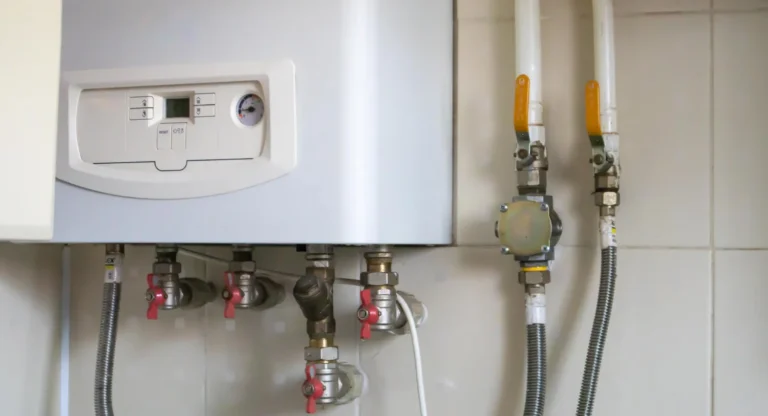

When replacing a combi boiler, maximum output is often the figure that receives the most attention. A higher kW rating can sound reassuring, particularly when a home has several radiators or the household uses plenty of hot water.
But maximum output only tells part of the story.
For many homes, the boiler spends much of its working life operating below its maximum capacity. During milder weather, or once rooms have reached the desired temperature, the heating demand can be considerably lower. This is where minimum output and modulation become important.
If you are considering a new combi boiler edinburgh, understanding these figures can help you have a more informed conversation about boiler selection and installation.
Boiler Sure can help explain how boiler output relates to your property rather than simply focusing on the largest available kW rating. Speak to our team if you would like practical guidance before choosing your replacement boiler.
What is minimum boiler output?
Minimum output is the lowest level of heat production at which a boiler can operate while maintaining stable operation.
Maximum output, by comparison, represents the upper end of the boiler’s available heating capacity.
The difference matters because a home rarely needs maximum heating output continuously. Once the property is warm, the boiler may only need to provide a relatively small amount of heat to replace the heat being lost through walls, windows, doors and ventilation.
A boiler with a suitable minimum output can reduce its heat production as demand falls.
This is known as modulation.
Why does modulation matter in a combi boiler?
Modulation allows the boiler to adjust its output rather than repeatedly operating at full power.
Imagine a home that needs a substantial amount of heat when it is first warming up on a cold morning. Once the rooms reach the desired temperature, the ongoing requirement may be much smaller.
A boiler capable of reducing its output can respond to that lower demand.
This can support:
- Longer periods of continuous operation
- More stable room temperatures
- Less frequent starting and stopping
- Better matching between heat production and demand
- Greater opportunity for efficient condensing operation
The exact performance depends on the boiler model, controls, system design and property.
Modulation should therefore be considered as part of the overall system rather than as an isolated specification.
Why can an oversized boiler cause problems?
Oversizing is not simply a question of buying a boiler that is too powerful. The relationship between the boiler’s output range and the property’s heat demand is also important.
Suppose a home needs only a small amount of heat to maintain its temperature, but the boiler cannot reduce its output sufficiently. Once the property reaches the target temperature, the boiler may reach its operating limit and switch off. As the heating system cools, it starts again.
This repeated process is known as cycling.
Some cycling is normal, but frequent cycling can prevent the boiler from operating as smoothly as it could.
A boiler with a lower minimum output may be able to remain operating at a reduced level for longer.
Maximum output versus minimum output
| Specification | What it means | Why it matters |
| Maximum output | Highest available heat output | Helps meet peak heating demand |
| Minimum output | Lowest stable operating output | Helps match lower heating demand |
| Modulation range | How far output can be adjusted | Indicates how flexibly the boiler responds |
| Hot water output | Capacity available for domestic hot water | Important for combi performance |
| Heating output | Capacity available for space heating | Helps determine suitability for the property |
The figures should be checked against the manufacturer’s technical information because different boilers can have different operating ranges.
Does a larger kW rating mean better performance?
Not necessarily.
For a combi boiler, maximum output can be particularly relevant to domestic hot water. Unlike a system boiler with a separate hot water cylinder, a combi boiler heats water as it is demanded.
A household wanting a strong hot water flow may therefore need a higher-output combi than the home’s space-heating requirements alone would suggest.
However, selecting the boiler solely because it has the highest kW rating can overlook its minimum output.
The better question is whether the boiler provides an appropriate range for the property’s heating and hot water requirements.
For example, two boilers might both offer similar maximum heating outputs but have different minimum outputs. Their ability to respond to low heating demand could therefore differ.
How is a combi boiler’s output actually chosen?
An installer should consider the property’s heating requirements and the household’s hot water expectations.
For space heating, factors can include:
- Property size
- Heat loss
- Insulation
- Number of rooms
- Window specification
- Existing radiator capacity
- Desired indoor temperatures
For domestic hot water, considerations can include:
- Number of bathrooms
- Typical shower use
- Desired hot water flow
- Simultaneous water use
- Incoming mains water flow and pressure
This distinction is important.
A property may have a modest space-heating requirement but still benefit from a higher-output combi to provide a particular level of hot water performance.
The selected appliance therefore needs to balance both sides of the job.
Could your radiators affect the boiler you choose?
Yes.
Radiators transfer heat from the water circulating through the heating system into the rooms. Their capacity affects how much heat can be delivered at different water temperatures.
If radiators are relatively small, the heating system may need higher water temperatures to deliver the required heat. Larger or appropriately sized radiators can provide the required heat at lower temperatures.
This is relevant to condensing boiler operation because lower return temperatures can give a modern boiler greater opportunity to recover heat through condensation.
Consequently, boiler selection should not be separated from the condition and capacity of the existing heating system.
A professional assessment can identify whether the current radiators are appropriate for the proposed boiler and operating temperatures.
What does this mean for a new combi boiler installation?
Choosing a new combi boiler edinburgh homeowners can rely on involves more than selecting a brand and maximum output.
The installer should consider how the appliance will operate under different levels of demand.
A useful discussion could cover:
- Estimated heating demand
- Hot water requirements
- Maximum heating output
- Minimum heating output
- Modulation range
- Radiator capacity
- Heating controls
- Expected flow temperature
- Commissioning and system balancing
This information provides a much clearer picture of how the proposed system has been designed.
If you are reviewing different options, contact Boiler Sure and ask our team to explain the practical differences between the proposed boiler specifications. Understanding the numbers can make a quotation much easier to assess.
Why are lower minimum outputs useful during mild weather?
Heating demand changes throughout the year.
A property may require substantial heat during a particularly cold spell but considerably less during spring or autumn. Even during winter, demand can change throughout the day depending on outdoor temperature, sunlight and household activity.
A boiler that can reduce its output sufficiently has greater flexibility to respond to these changes.
For example, a heating system may initially require a relatively high output after the heating has been switched on. As the rooms warm, the required output falls. The boiler can then reduce its output if its modulation range allows it to do so.
This can create smoother operation than repeatedly switching between high output and off periods.
Is minimum output more important than maximum output?
Neither specification should be considered in isolation.
Maximum output can be important for meeting peak heating requirements and, for a combi, providing the desired hot water performance. Minimum output can be important for maintaining efficient and stable operation when heating demand is low.
The appropriate balance depends on the individual property and household.
A useful way to think about it is that maximum output helps answer:
“Can this boiler provide enough heat when demand is high?”
Minimum output helps answer:
“Can this boiler reduce its output enough when demand is low?”
Both questions deserve attention before an appliance is selected.
What should you ask an installer before choosing a combi?
You do not need to understand every technical specification, but asking a few questions can help clarify whether the proposed boiler is appropriate.
Consider asking:
- What heating output does the property actually require?
- What is the boiler’s minimum heating output?
- What is its modulation range?
- What maximum output is available for hot water?
- Are the existing radiators suitable?
- What controls are being proposed?
- What flow temperature is expected?
- How will the system be commissioned?
- Is any additional work required before the boiler is installed?
A good installer should be able to explain the answers in plain language.
A typical Edinburgh home example
Consider a two-bedroom home with reasonable insulation and a relatively modest space-heating requirement.
The household wants strong hot water performance because the property has a bathroom and frequently uses hot water for showers and kitchen tasks. A combi with a suitable maximum output may therefore be considered.
However, the heating requirement is much lower than the boiler’s maximum capacity for much of the year.
Looking at minimum output becomes useful. If the boiler can reduce its heating output sufficiently, it has greater scope to match the property’s actual demand once the home has warmed up.
This does not mean the boiler with the lowest minimum output is automatically the correct choice. The complete specification still needs to suit the property’s heating and hot water requirements.
How does the installation itself affect performance?
Even a well-specified appliance needs to be installed and commissioned correctly.
System condition, controls, radiator balancing and operating settings can all influence performance.
During installation, the engineer should follow the manufacturer’s instructions and applicable requirements. The system should then be checked and commissioned so that the boiler and controls operate as intended.
If settings are unclear after installation, homeowners should ask the installer to explain them rather than changing several controls without understanding their purpose.
Frequently Asked Questions
Final thoughts
The headline figure on a boiler quotation is only one part of the decision. Output, minimum output and modulation can all affect how an appliance responds to the heating demand of a home.
A boiler that is too large for the property’s requirements may not operate in the same way as one with a more suitable output range. At the same time, selecting an appliance with insufficient capacity can create problems when the home or hot water system needs more heat.
This is why new boiler cost edinburgh should be considered alongside the specification of the boiler and the work required to install it properly.
The installation itself can also account for a significant part of the final price. Pipework, controls, flue arrangements, system preparation, commissioning and other requirements can all affect what a homeowner ultimately pays.
When comparing boiler installation costs, ask what is included rather than comparing headline prices alone. A clear quotation should explain the proposed boiler, its output, controls, installation work and any additional requirements.
Boiler Sure can help homeowners understand these factors before they commit to a replacement. The focus should be on finding a suitable heating solution for the property and ensuring that the installation is properly planned.
If you are considering a new boiler and want to understand what is included in your quotation,
speak to Boiler Sure today or request a bespoke quote. Our team can help explain the specification and installation requirements in straightforward terms.