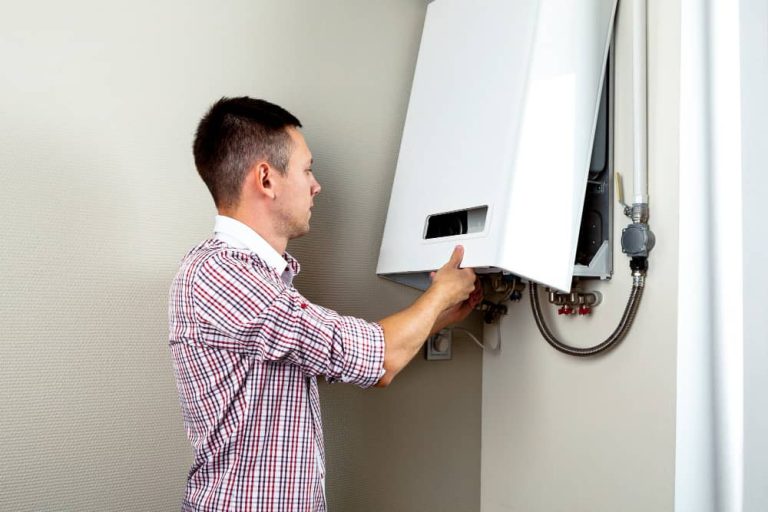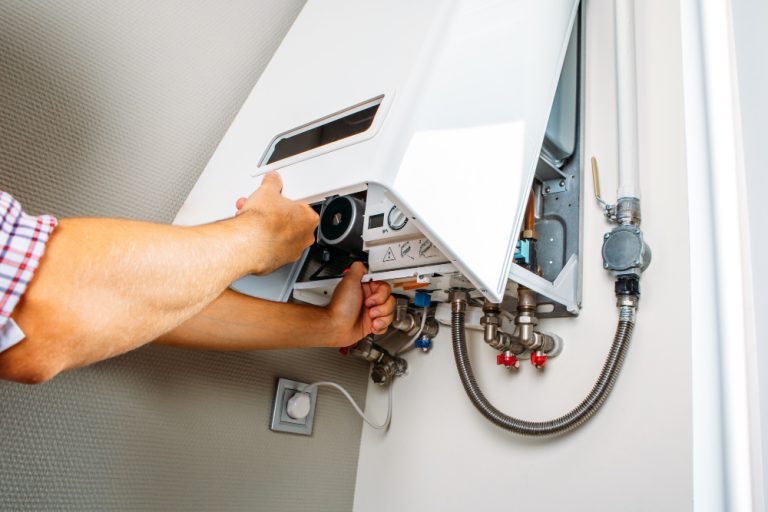

A boiler that repeatedly runs at a high temperature is not necessarily broken. However, if a heating system struggles to operate comfortably at lower flow temperatures, keeps cycling, or takes longer than expected to heat the home, it is worth investigating what is happening.
The issue may involve the boiler itself, but it could also relate to controls, radiator performance, system balancing, circulation, settings or the condition of the heating system.
That distinction matters when looking at boiler repair cost. Paying for a repair without first identifying the underlying cause can mean treating a symptom rather than resolving the reason the system is behaving differently.
Why might a boiler always appear to run at a high temperature?
Modern heating systems are designed to adjust their output and operating conditions according to demand. A boiler may therefore operate differently when heating a property from cold compared with maintaining an already comfortable room temperature.
A high flow temperature is not automatically a fault.
There are several possible explanations for consistently high-temperature operation, including:
- Boiler settings that have not been adjusted for the property
- Controls that are not communicating correctly with the boiler
- Poor system balancing
- Restricted circulation
- Radiators that are not distributing heat effectively
- An incorrectly configured heating curve where applicable
- A boiler fault
- A system that has not been properly commissioned
- Incorrect expectations about how the boiler should operate
The first step should therefore be diagnosis rather than immediately replacing components.
Could the problem actually be the controls?
Yes. Heating controls influence how and when the boiler responds to demand.
A thermostat, programmer, smart control or other control component may be incorrectly configured, incompatible with the boiler, or simply not being used in a way that allows the system to operate effectively.
For example, a heating system may continue demanding heat because the thermostat is positioned somewhere that does not represent the temperature of the rest of the home.
Other possibilities include:
- Incorrect schedules
- Poor thermostat positioning
- Faulty sensors
- Wiring problems
- Incorrect control settings
- Communication problems with compatible smart controls
Before assuming that a boiler needs an expensive repair, an engineer can assess whether the controls are contributing to the problem.
A useful distinction
A boiler fault generally means something within the appliance or its associated components is not operating correctly.
A setup issue may mean the equipment is working but has not been configured or balanced appropriately.
The symptoms can sometimes look very similar to a homeowner.
If your heating system seems to behave differently from how you expect, a professional assessment can help establish whether the issue is a genuine boiler fault or something related to the wider system.
What symptoms suggest the system needs investigating?
Persistent high-temperature operation becomes more worth investigating when it appears alongside other symptoms.
Look out for:
| Symptom | Possible area to investigate |
|---|---|
| Boiler frequently switches on and off | Cycling, controls, output or system demand |
| Radiators heat unevenly | Balancing, circulation or radiator condition |
| Some rooms remain cold | Radiator output, controls or heat distribution |
| Boiler takes a long time to satisfy the thermostat | System performance or control settings |
| Heating feels difficult to regulate | Controls, thermostat position or configuration |
| Flow temperature remains very high | Boiler settings, control strategy or system demand |
| Boiler displays a fault code | Appliance fault or associated component |
| Pressure repeatedly drops | Leak, expansion or pressure-related issue |
These are not definitive diagnoses. The same symptom can have several possible causes.
That is why an engineer should investigate the complete system rather than replacing the first component that appears suspicious.
Can system balancing affect boiler performance?
It can affect how heat is distributed around the property.
Balancing involves adjusting the heating system so that radiators receive an appropriate amount of hot water relative to their position and demand.
If the system is significantly unbalanced, some radiators may become very hot while others struggle to deliver enough heat.
This can make homeowners respond by increasing the boiler temperature, even though the underlying issue may be distribution rather than insufficient boiler temperature.
A system assessment may therefore consider radiator temperatures, lockshield settings, circulation and other relevant components.
What about circulation problems?
Water needs to circulate through the heating system effectively.
If circulation is restricted, the boiler may not behave as expected. Potential causes can include:
- A circulation pump issue
- Air in the system
- Restrictions within pipework
- Sludge or contamination
- Incorrect system pressure
- Valve problems
- Incorrect pump settings
Again, these possibilities require proper diagnosis.
A boiler that appears to be running excessively hot does not necessarily need a new heat exchanger, pump or control board. The correct repair depends on what testing identifies.
Can a boiler be working correctly but still be inefficiently set up?
Yes.
This is one of the more important distinctions for homeowners.
A boiler can ignite, heat water and provide heating while still being configured in a way that does not make the best use of its capabilities.
For example, a condensing boiler generally benefits from sufficiently low return temperatures because this allows more effective condensation of water vapour in the flue gases.
If system temperatures are consistently higher than necessary, the boiler may spend less time operating under conditions that support strong condensing performance.
That does not mean homeowners should simply turn the flow temperature as low as possible. The heating system still needs to deliver enough heat to maintain comfortable indoor temperatures.
The appropriate settings depend on the boiler, property, radiators, controls and heating demand.
When does a high flow temperature indicate a genuine repair issue?
There is no single temperature at which a boiler suddenly changes from "working" to "broken".
Instead, the engineer should look at the behaviour of the whole system.
A repair becomes more likely when high-temperature operation is accompanied by signs such as:
- Fault codes
- Unusual noises
- Unstable pressure
- Repeated shutdowns
- Poor hot water performance
- Inconsistent heating
- Burner or ignition problems
- Abnormal temperature changes
- Components failing during testing
The engineer may then carry out appropriate checks to identify whether an appliance component requires attention.
This is very different from simply assuming that high flow temperature equals a boiler fault.
Could servicing identify the problem?
Routine servicing and system checks can sometimes identify developing issues before they become more disruptive.
A service may include checks of the boiler’s operation, safety and relevant components, depending on the appliance and service being carried out.
However, a service is not necessarily the same thing as a diagnostic repair visit.
If your boiler is showing a fault, repeatedly shutting down or failing to heat the property properly, explain the symptoms when booking the appointment. This gives the engineer useful information before they arrive.
When arranging a repair or diagnostic visit, describe what the boiler is doing, when the problem occurs and whether the issue affects heating, hot water or both. These details can help the engineer investigate more efficiently.
How can homeowners avoid unnecessary repair costs?
The most useful step is to avoid jumping to a conclusion about the cause.
For example, if radiators are cold, it is tempting to assume the boiler is failing. But the cause could be a valve, circulation problem, air, system pressure or controls.
Similarly, if the boiler appears to run at a high temperature, that does not automatically mean an internal component needs replacing.
A sensible diagnostic process should consider:
- What symptoms are occurring?
- When do they happen?
- Does the problem affect heating, hot water or both?
- Are any fault codes displayed?
- Is system pressure stable?
- Are all radiators behaving normally?
- Are the controls responding correctly?
- Are there unusual noises or smells?
- Has the system recently been altered?
- What does testing show?
The answers help narrow down the actual cause.
What can influence boiler repair cost?
There is no universal price for a repair because the work depends on the fault identified.
Factors can include:
- The component that has failed
- The time required for diagnosis
- Labour involved
- Availability of replacement parts
- Whether additional system issues are discovered
- Whether the boiler is accessible
- Whether more than one issue needs attention
A relatively straightforward component replacement can be very different from a repair involving several parts or a more complex diagnostic process.
This is why it is useful to ask what has failed, what needs replacing and why before agreeing to significant repair work.
When does boiler cover become relevant?
Boiler cover can provide a different approach to dealing with unexpected heating problems, depending on the policy.
If you are researching boiler cover edinburgh, check the actual terms rather than assuming every policy provides the same level of protection.
Policies can differ in areas such as:
- Covered boiler types
- Age restrictions
- Parts included
- Labour cover
- Callout arrangements
- Excesses
- Claim limits
- Waiting periods
- Servicing requirements
- Exclusions for pre-existing faults
Some policies may also have specific conditions about maintenance or eligibility.
The cost and suitability of cover therefore need to be considered alongside your boiler’s age, condition and likely repair requirements.
Is boiler cover cheaper than paying for repairs individually?
There is no universal answer.
The value of cover depends on the policy, its exclusions, the premium, any excess and how often you need repairs.
Someone with a newer boiler may have different considerations from someone with an older appliance that has required several repairs.
Rather than comparing only the monthly or annual premium, look at what the policy actually covers and what you would still need to pay if something went wrong.
If you are considering boiler cover edinburgh, read the terms carefully before deciding whether it fits your circumstances.
What if the boiler is old?
Age alone does not mean a boiler needs replacing.
An older boiler that is reliable, safe and economical enough for the household may continue to be useful.
However, repeated failures can change the calculation.
If repair requirements become frequent, parts become harder to source, or the cost of keeping the appliance running starts to approach the cost of replacement, it may be sensible to discuss the alternatives.
That decision should be based on the boiler’s condition, expected remaining service life, repair history and the homeowner’s requirements rather than age alone.
When should you call an engineer?
Professional assistance is appropriate when the problem cannot be safely identified or resolved through normal homeowner checks.
Contact a qualified heating professional if:
- The boiler repeatedly locks out
- A fault code keeps returning
- Heating or hot water is unreliable
- System pressure repeatedly falls
- You hear unusual noises
- A component appears to be malfunctioning
- The boiler requires internal work
- You suspect a gas or combustion problem
If you smell gas, suspect carbon monoxide, or believe there is an immediate safety issue, follow the appropriate emergency gas safety guidance rather than attempting to investigate the appliance yourself.
What should you ask before approving a repair?
Before agreeing to a repair, it is reasonable to ask for a clear explanation.
Useful questions include:
- What has caused the problem?
- Which component has failed?
- What testing confirmed the fault?
- Does the repair address the underlying issue?
- Are there any other system problems?
- What parts are being replaced?
- Is there a warranty on the repair?
- Could the system need further work?
This does not mean challenging every diagnosis. It simply gives you a clearer understanding of what you are paying for.
A practical example
Imagine a homeowner notices that the boiler frequently reaches a high flow temperature and cycles on and off.
The first assumption might be that the boiler itself is faulty.
An engineer could instead discover that the system is poorly balanced and that several radiators are receiving heat unevenly. They may also find that the control settings are not appropriate for the way the property is heated.
In that situation, replacing a boiler component might not resolve the underlying issue.
A system assessment can therefore be more useful than immediately treating the symptom as an appliance failure.
Final Thoughts
A boiler that operates at a high temperature is not automatically in need of repair. The important question is why it is behaving that way and whether other symptoms point towards a problem with the appliance, controls or wider heating system.
Understanding this distinction can help homeowners approach boiler repair cost with a clearer picture of what they are actually paying for.
Whether the answer is a simple adjustment, system balancing, a component repair, servicing or eventually replacement, proper diagnosis should come before deciding on the work.
Boiler Sure can help homeowners understand boiler and heating system issues, including situations where temperature behaviour, controls or repeated faults need closer investigation.
If your boiler is repeatedly running at high temperatures, cycling or struggling to heat your home consistently, contact Boiler Sure to discuss the symptoms and arrange appropriate professional help.